Novi Heder 2021 001 1

Poetic Affinity and Postmodernism in Milorad Pavić and Sava Damjanov

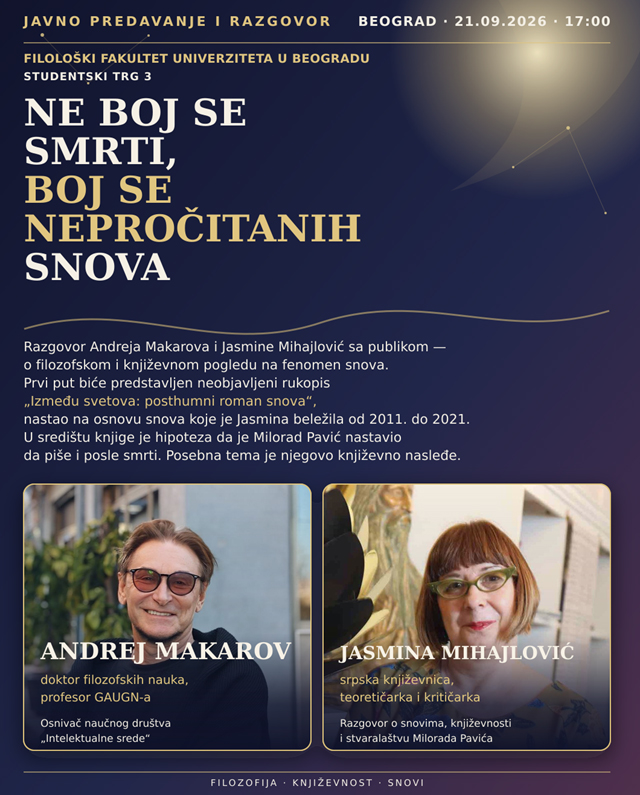
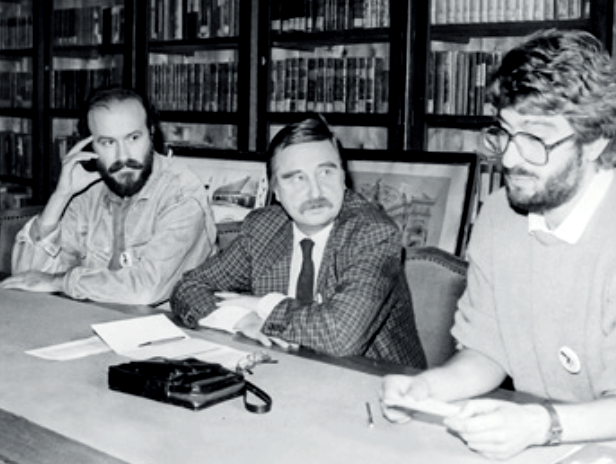
The collaboration between two professors and writers, Sava Damjanov and Milorad Pavić, represents one of the most interesting and fruitful relationships in contemporary Serbian literature and academic life. It went far beyond the conventional relationship between professor and student, developing into a long-standing intellectual affinity, a shared literary mission, and a sincere friendship.

Pavić recognized in Damjanov a young scholar who possessed a special "intuitive nerve" for discovering neglected, eccentric, and forgotten authors.

Pavić wrote forewords to Sava Damjanov's key early scholarly books (The Great Code, on Đorđe Marković Koder, and Gardens of the Unreal). In doing so, he lent academic legitimacy to Damjanov's then radical, postmodern approach to interpreting literary tradition.

What bound them most strongly was their shared passion for literary fantasy, linguistic experimentation, and postmodernism.

Revolution in form: while Pavić astonished the world with his nonlinear labyrinths of prose (such as Dictionary of the Khazars), Damjanov was one of the first and most important Serbian theorists to analyze and decode these procedures in detail and establish their place within Serbian literary scholarship.

Provocation and play: both understood literature as an interactive game with the reader, breaking down the rigid conventions of realism and introducing elements of phantasmagoria, mysticism, and defamiliarization. Damjanov often emphasized that Pavić was "the most unusual man he had ever met" – a gentleman in his manners, yet an absolute revolutionary in his way of thinking.

As chief editor, Damjanov led a major publishing undertaking: the preparation and publication of the nine-volume collected Literary-Historical and Essayistic Works of Milorad Pavić (published by the Cultural Centre of Vojvodina "Miloš Crnjanski" and the National Library of Serbia). Damjanov prepared these texts according to the most advanced textual scholarship standards, supplementing them with scholarly apparatus and reception studies, thus ensuring that Pavić's groundbreaking scholarly work would remain permanently accessible to new generations.

The relationship between Pavić and Damjanov is a rare example in Serbian culture of two powerful, original, and authentic literary figures who did not come into conflict but instead complemented one another. Pavić gave Damjanov wings and intellectual freedom within the academic world, while Damjanov repaid him with decades of profound theoretical understanding and, ultimately, by giving definitive form to his scholarly legacy.

A READER CREATES A DIGITAL GUIDE TO DICTIONARY OF THE KHAZARS

In early August 2026, a new independent digital project devoted to Milorad Pavić's Dictionary of the Khazars appeared online — Dictionary of the Khazars Reading Companion.

The project was created by a reader who discovered Pavić's novel through an interest in ergodic literature. While reading Dictionary of the Khazars and following the connections between its entries, the reader created a free web application designed to help others navigate the book.

At the heart of the application is an interactive network of entries. As readers progress through the novel and mark the entries they have read, the connections between them gradually appear. The system is designed not to reveal in advance anything the reader has not yet encountered.

The application also allows readers to make, save and export notes, giving Dictionary of the Khazars a kind of contemporary digital reading map.

The project was presented in early August 2026 in the international Reddit community WeirdLit, devoted to unusual and experimental literature. Readers responded immediately: some said they planned to reread Dictionary of the Khazars using the application, while others, having discovered the project, decided they now wanted to read the novel for the first time.

More than four decades after the first publication of Dictionary of the Khazars, its open and nonlinear structure continues to generate new ways of reading — this time through a tool created not by a publisher or literary institution, but by a reader.

Dictionary of the Khazars Reading Companion:
khazars.beardmo.gg

Reddit / WeirdLit — presentation of the project:
Dictionary of the Khazars Reading Companion — WeirdLit

In June, the Serbian Academy of Sciences and Arts presented a major publishing project comprising nine scholarly volumes by Milorad Pavić, published by the National Library of Serbia and the Miloš Crnjanski Cultural Centre of Vojvodina in Novi Sad. The speakers were the editor of the edition, Professor Emeritus Sava Damjanov, Professor Aleksandar Jerkov, Professor Slobodan Grubačić, Director of the SASA Library, and Jasmina Ninkov, Director of the National Library of Serbia.

Read more:
RTS — Milorad Pavić's literary-historical essays presented at SASA 

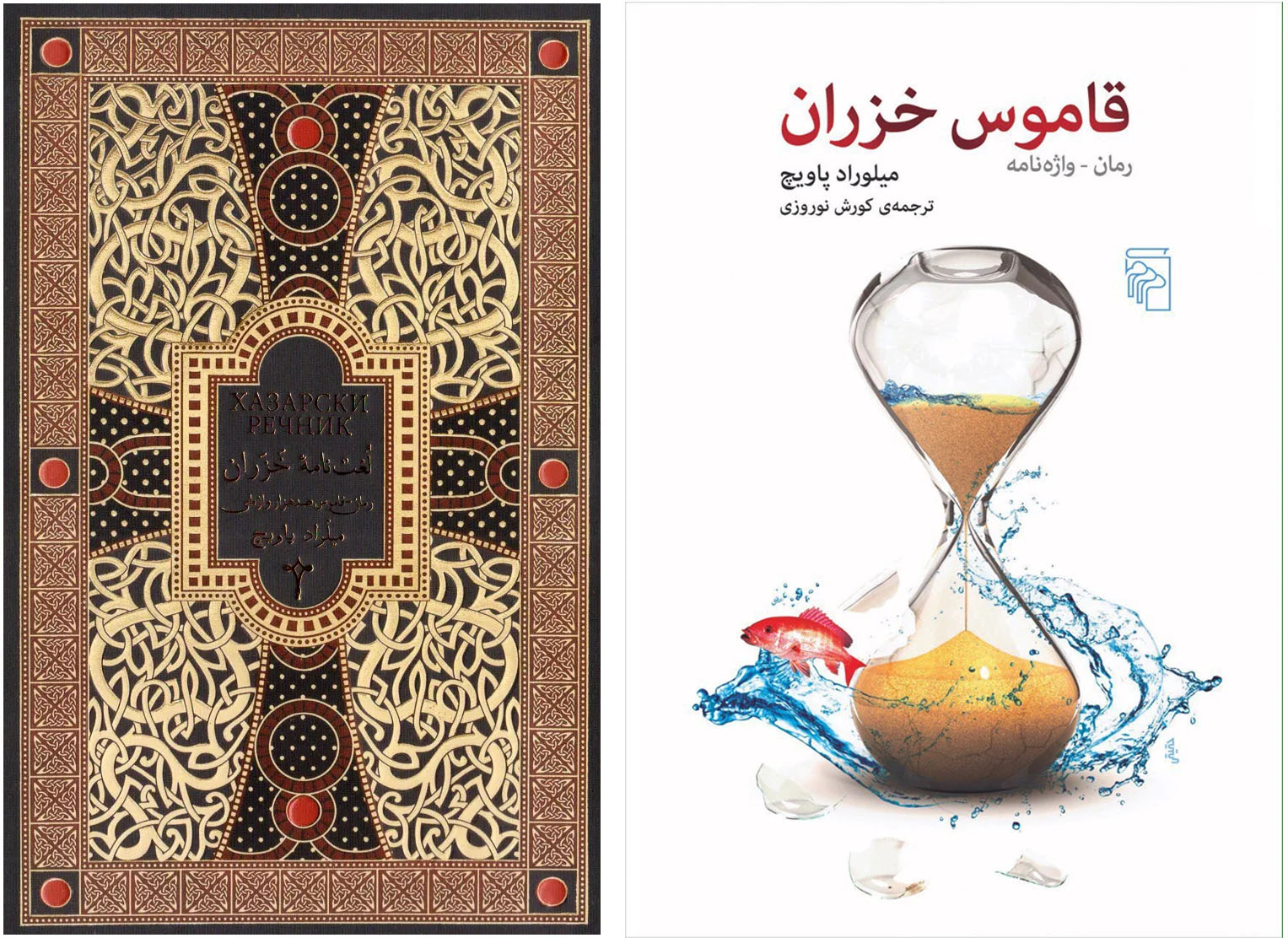
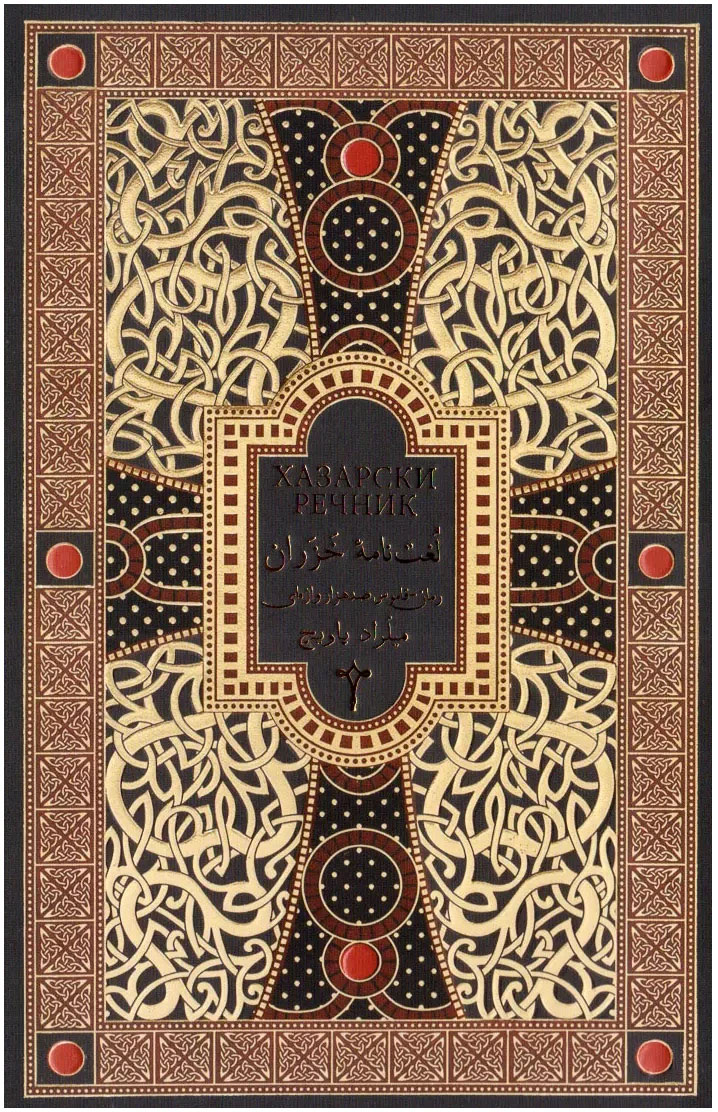
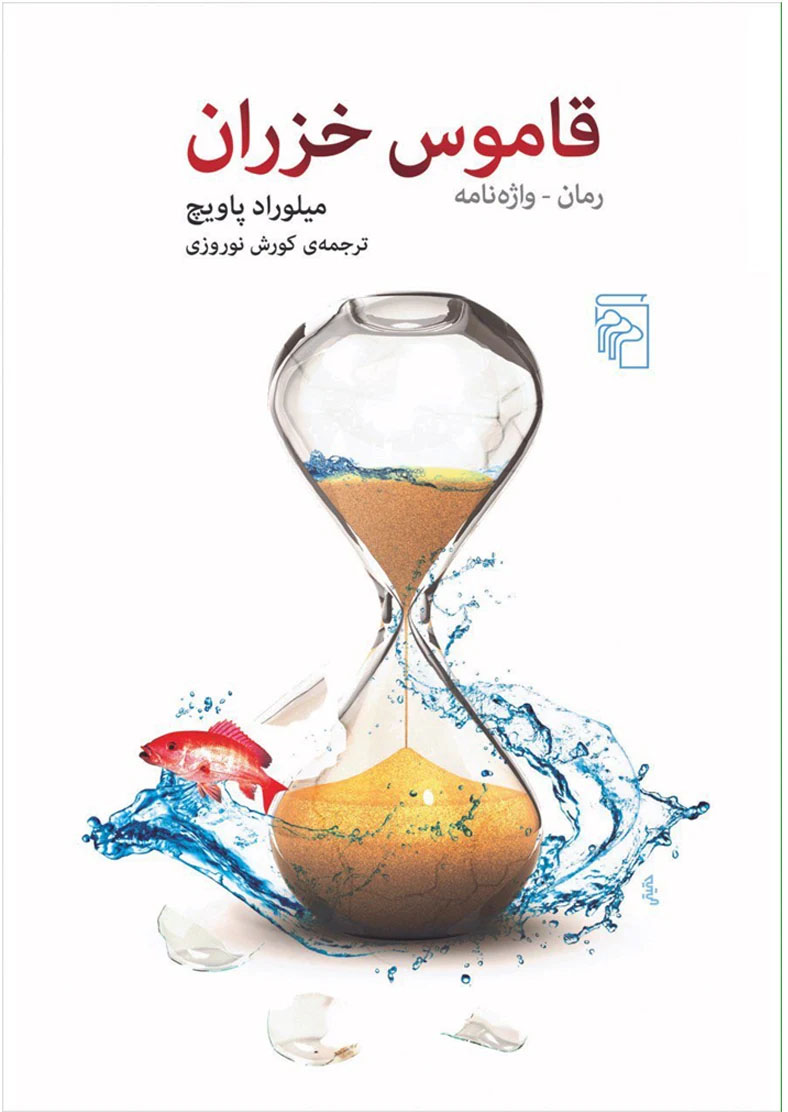
In Russia, an omnibus edition of The Star Cape and Writing Box was published, as well as a collection of short stories entitled Record in the Sign of Virgo. In Kuwait, Dictionary of the Khazars appeared in Arabic for the first time, while new editions of the same novel are due to be published in Mongolia and Azerbaijan in September. Interestingly, until now, the only Pavić novel translated into Mongolian was The Inner Side of the Wind.

In June, Moscow hosted DICTIONARY OF THE KHAZARS, a dinner-performance accompanied by a seven-course tasting menu and based on Milorad Pavić's cult novel. The production was staged at Community and directed by Varvara Obidor.

And finally, a reminder: which book represents Serbia on the literary map of the world?

Milorad Pavić – A Writer Facing the Future

On the Russian cultural portal Balkanist, on July 31, 2026, a new article by writer Platon Besedin was published, titled "Milorad Pavić: Pause, Reflect, Save Oneself," dedicated to Pavić's work and its exceptional contemporary relevance.
Starting from the book Biography of Belgrade, Besedin views Pavić as a writer whose key themes—time, memory, the future of the book, changing reading habits, and the search for new novel forms—are perhaps more relevant today than when his most famous texts were written.
The author pays special attention to Pavić's reflections on the transition from the "civilization of the Word" to the "civilization of the Number," the future of the book and the reader, as well as his belief that the novel should not be abandoned, but reinvented.
Besedin sees Pavić as a writer firmly facing the future, interested not only in the literature of his time but also in the future transformations of text, reading, and man's relationship with time.
In the conclusion of the article, Pavić's work is interpreted as a unique defense of literature, culture, and historical memory against oblivion, calling such works "protector-texts" (тексты-обереги)—texts that preserve the continuity of culture and humanity.
Platon Besedin's text represents yet another contemporary reading of Milorad Pavić, showing that the questions raised in his work belong not only to 20th-century literature but also to 21st-century digital culture.
Platon Besedin, "Milorad Pavić: Pause, Reflect, Save Oneself," Balkanist, July 31, 2026.
Read the original text in Russian HERE