Novi Heder 2021 001 1

Milorad Pavić – A Writer Facing the Future

On the Russian cultural portal Balkanist, on July 31, 2026, a new article by writer Platon Besedin was published, titled "Milorad Pavić: Pause, Reflect, Save Oneself," dedicated to Pavić's work and its exceptional contemporary relevance.
Starting from the book Biography of Belgrade, Besedin views Pavić as a writer whose key themes—time, memory, the future of the book, changing reading habits, and the search for new novel forms—are perhaps more relevant today than when his most famous texts were written.
The author pays special attention to Pavić's reflections on the transition from the "civilization of the Word" to the "civilization of the Number," the future of the book and the reader, as well as his belief that the novel should not be abandoned, but reinvented.
Besedin sees Pavić as a writer firmly facing the future, interested not only in the literature of his time but also in the future transformations of text, reading, and man's relationship with time.
In the conclusion of the article, Pavić's work is interpreted as a unique defense of literature, culture, and historical memory against oblivion, calling such works "protector-texts" (тексты-обереги)—texts that preserve the continuity of culture and humanity.
Platon Besedin's text represents yet another contemporary reading of Milorad Pavić, showing that the questions raised in his work belong not only to 20th-century literature but also to 21st-century digital culture.
Platon Besedin, "Milorad Pavić: Pause, Reflect, Save Oneself," Balkanist, July 31, 2026.
Read the original text in Russian HERE
AFTER 42 YEARS, DICTIONARY OF THE KHAZARS IS FINALLY PUBLISHED IN ARABIC

The 41st Translation Opens a New Chapter in the Global Reception of Milorad Pavić

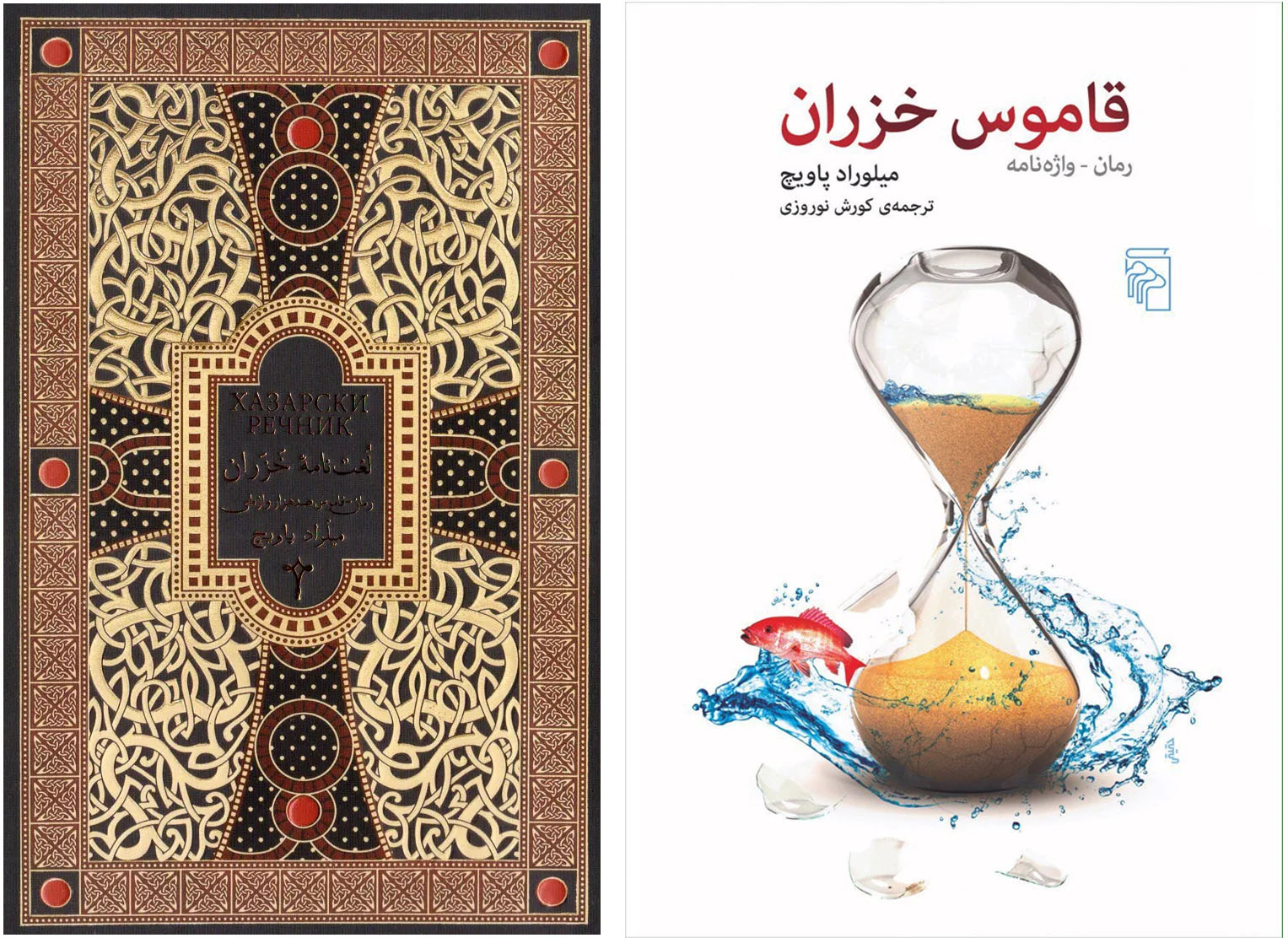
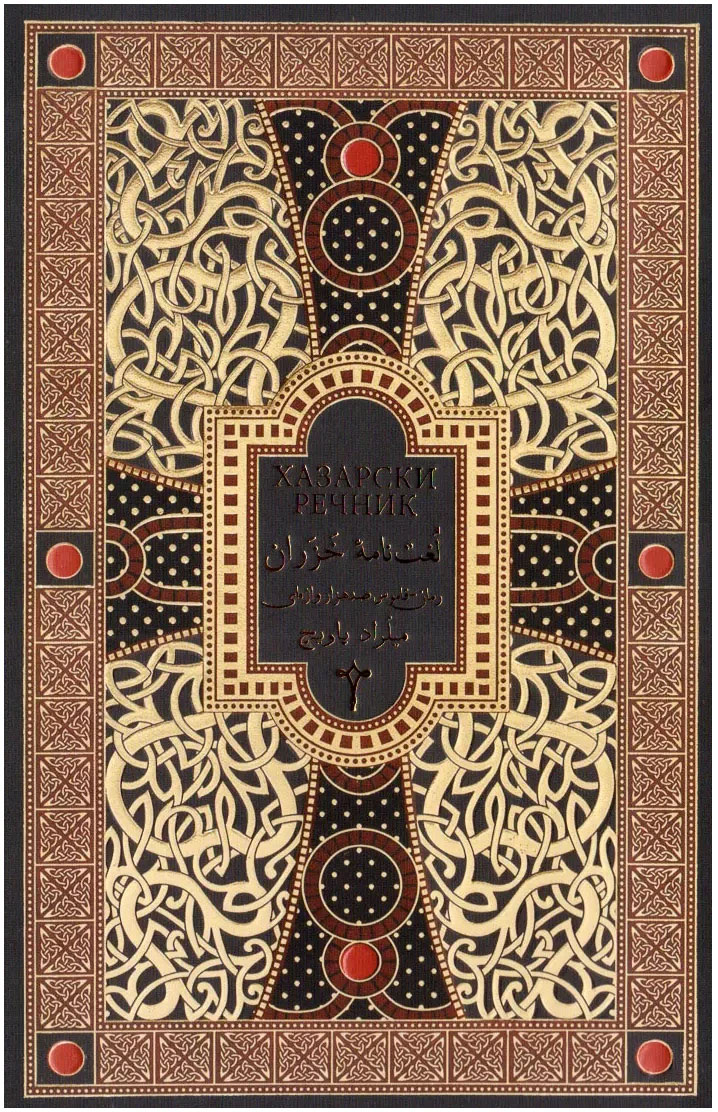
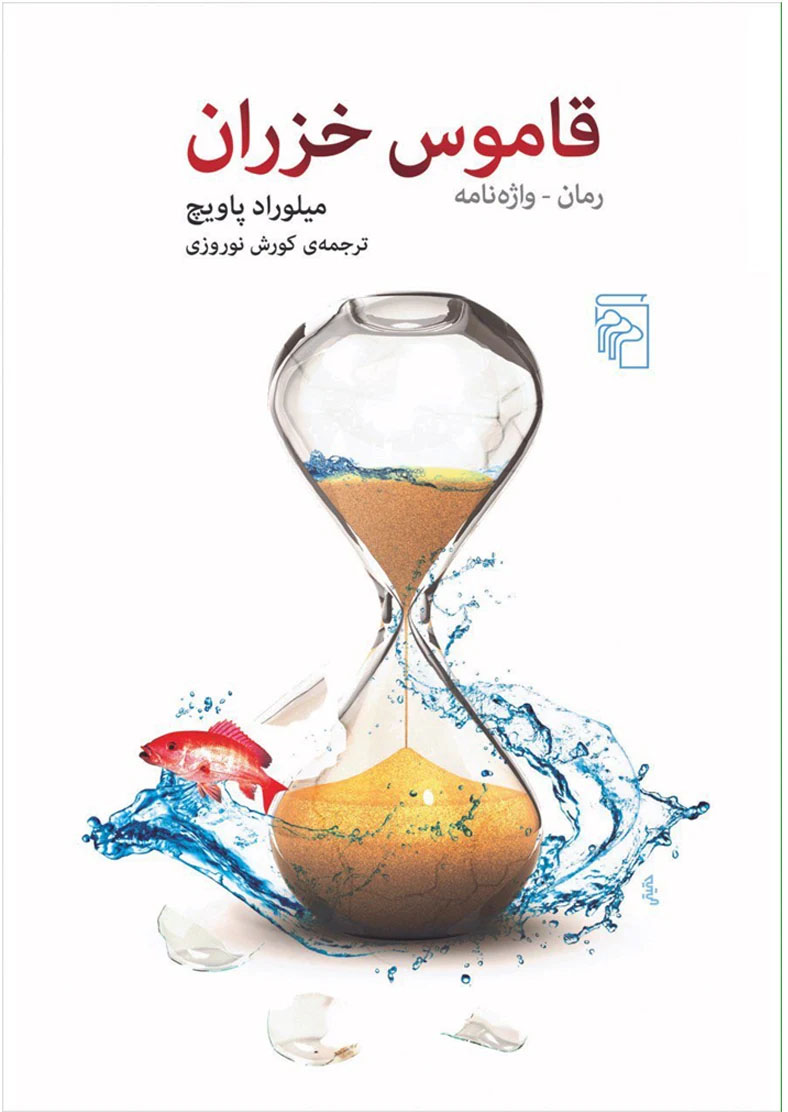
Forty-two years after its first publication, Milorad Pavić's Dictionary of the Khazars has finally been published in Arabic, in a translation by Mohammed Ayat Hanna, released by Wasm Publications in Kuwait.

With this edition, Dictionary of the Khazars reaches its 41st translation, becoming available to readers throughout one of the world's largest linguistic and cultural communities.

The publication carries a profound symbolic significance. A novel whose very architecture is built upon the encounter of Jewish, Christian, and Islamic traditions has now entered the Arabic-speaking world, completing a literary journey that has lasted more than four decades.

The road to this edition was exceptionally long.

Although Dictionary of the Khazars has been translated into forty languages and has long been recognized as one of the landmark works of contemporary world literature, publication in Arabic proved to be one of the most challenging international publishing projects in the history of the novel. Numerous negotiations with publishers throughout the Arab world took place over many years before the project was finally realized through the long-standing cooperation with Introtema Translation and Copyright Agency, which facilitated the agreement with the Kuwaiti publisher.

Originally published in 1984, Dictionary of the Khazars continues to find new readers around the world, reaffirming its place among the most influential literary works of the late twentieth century.

*

Commenting on the publication of the Arabic edition, Jasmina Mihajlović, writer and holder of the literary rights of Milorad Pavić's estate, said:

"We waited forty-two years for this edition. After forty previous translations, Dictionary of the Khazars has finally found its voice in Arabic. For me, this is much more than the forty-first translation. It is proof that great literature transcends borders and ultimately finds its way where it once seemed impossible. I am especially moved that a novel bringing together Jewish, Christian, and Islamic traditions has now become part of the Arabic cultural world. I consider this edition one of the most important milestones in the international reception of Milorad Pavić's work in recent decades."

From Postmodernism to Ergodic Literature

The publication of the Arabic edition also offers an opportunity to highlight an important shift in the international understanding of Milorad Pavić's work.

Today, Dictionary of the Khazars is widely regarded as one of the canonical works of world ergodic literature.

The concept of ergodic literature, introduced by Norwegian literary theorist Espen J. Aarseth in his landmark study Cybertext: Perspectives on Ergodic Literature (1997), describes literary works that require non-trivial effort from readers in order to traverse the text. Rather than following a single linear sequence, such works invite multiple reading paths, alternative structures, and active participation by the reader.

Within this theoretical framework, Dictionary of the Khazars has become one of the foundational works of ergodic fiction and is frequently discussed as an important precursor to hypertext literature, digital fiction, and interactive narrative.

Milorad Pavić himself welcomed this critical reappraisal during his lifetime, recognizing that the concept of ergodic literature described the architecture of his novels more precisely than the broader label of postmodernism.

With its 41st translation and its long-awaited Arabic edition, Dictionary of the Khazars continues to demonstrate that literary innovation knows neither linguistic nor cultural boundaries.

By entering the Arabic-speaking world, the novel has now become part of all three great cultural traditions that constitute its own narrative universe, reaffirming its enduring place in world literature.

Editor's Note


Bibliographical Information

Milorad Pavić
Dictionary of the Khazars – Arabic Edition

Translator: Mohammed Ayat Hanna

Publisher: Wasm Publications, Kuwait

First Arabic Edition: 2026

ISBN: 978-1-961628-66-3

Images courtesy of Wasm Publications, Kuwait.

JASMINA MIHAJLOVIĆ'S WEBSITE

Jasmina Mihajlovic's website is located at https://jasminamihajlovic.com/, in three languages: Serbian, English and Russian. It contains the following sections: News, Biography and Books, Book Reviews, Media, Gallery and Blog - which can be considered a book that is constantly supplemented with various topics and cycles.

Blog J M 2

The blog, called Dashes and Little Things, can be found separately at: https://www.crticeisitnice.com/

Blog J M


Putovanje kroz vreme: poseta legatu Milorada Pavića

Danas su učenici VI i VII razreda OŠ Braća Baruh, predvođeni svojom nastavnicom istorije Radicom Miljaković Avramović, posetili legat Milorada Pavića, koji se nalazi u blizini škole.

Gospođa Jasmina Mihajlović ih je ugostila, pokazala legat, i ispričala o životu i radu našeg velikog pisca. Deca su pokazala veliko interesovanje za Pavićevo delo, i snimila video u okviru svoj projekta „Putovanje kroz vreme“. Pogledajte ga na YouTube kanalu: